How Epirus is Ending the Drone Age with Microwaves
We are witnessing the end of the Kinetic Age.
For 500 years, the strategy of defense was simple: to stop a threat, you hit it with a physical object. You shoot a bullet to stop a soldier. You fire a missile to stop a jet.
But the drone swarm has made that logic obsolete.
When an enemy launches 100 cheap ($500) autonomous drones simultaneously, “hitting” them one by one is mathematically impossible. You cannot fire $2 million Patriot missiles at disposable toys. You run out of ammo, or you run out of money.
A sniper cannot fight a swarm of bees. You need a different kind of weapon.
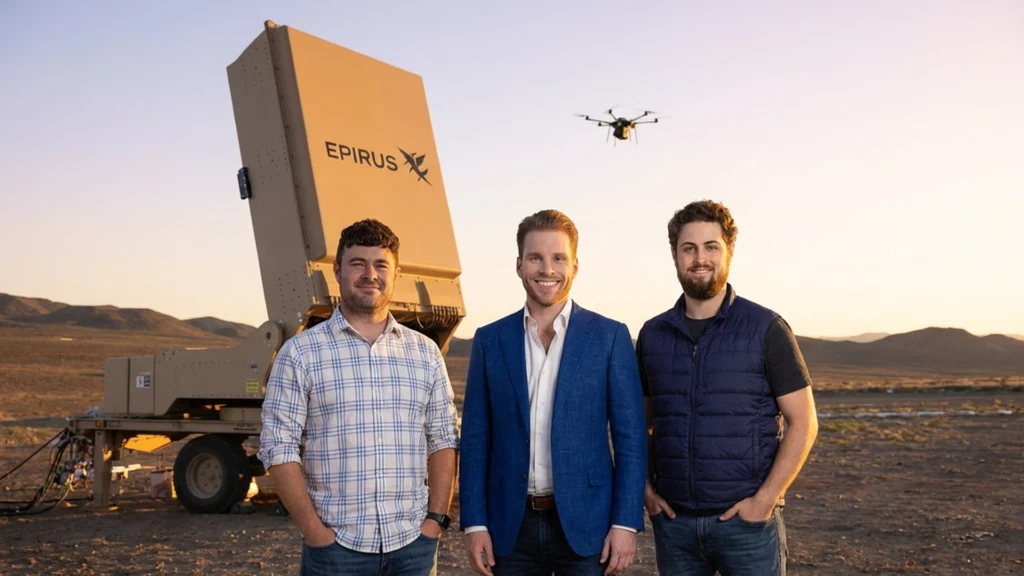
They are building the Leonidas system. It looks like a simple trailer, but it is the world’s most advanced High-Power Microwave (HPM) weapon.
It doesn’t shoot bullets. It shoots invisible pulses of energy that fry the electronics of anything in the sky.
The Problem: The Swarm
Lasers (like the Iron Beam) are a step forward, but they still suffer from the “optical” flaw: they have to focus on one target at a time, burn through it, and move to the next.
Against a diving swarm, a laser is too slow. A gun is too overwhelmed.
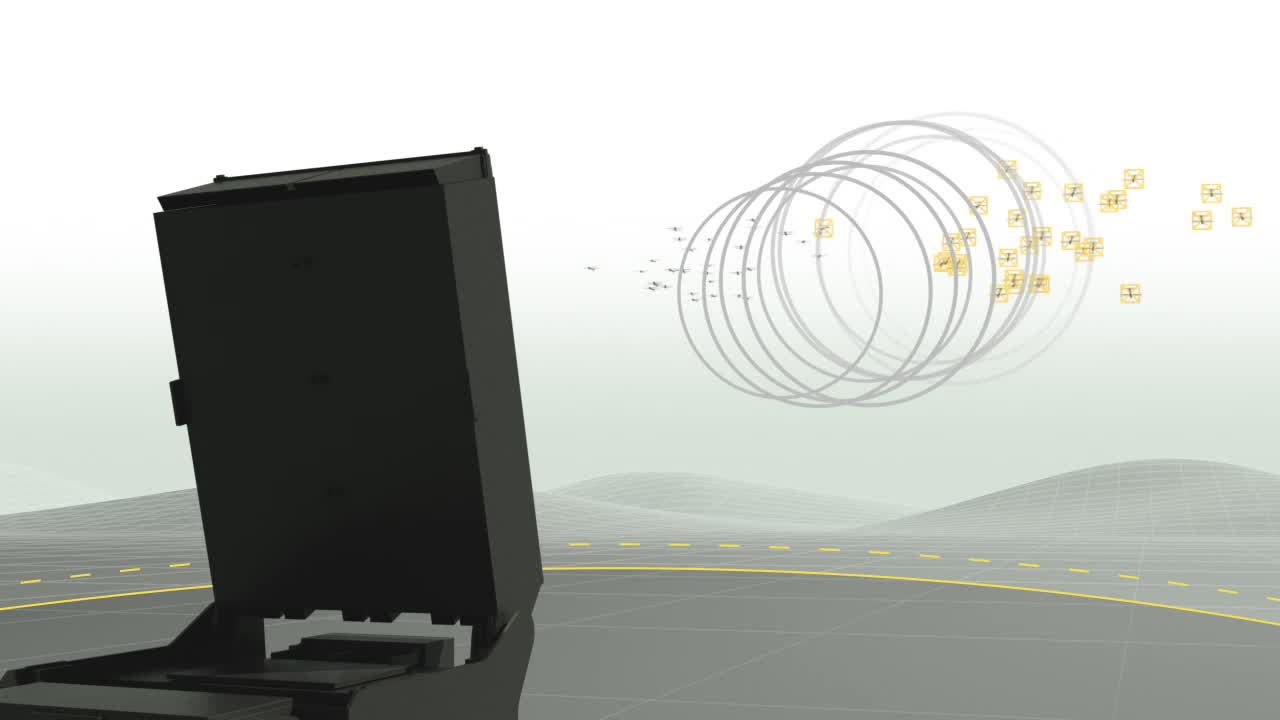
We needed a weapon that acts not like a rifle, but like a Force Field.
The Playbook: Moore’s Law for Weapons
Directed energy has been around for 50 years, but it was historically built on “Vacuum Tubes” (magnetrons). They were heavy, fragile, and dangerous to the user.
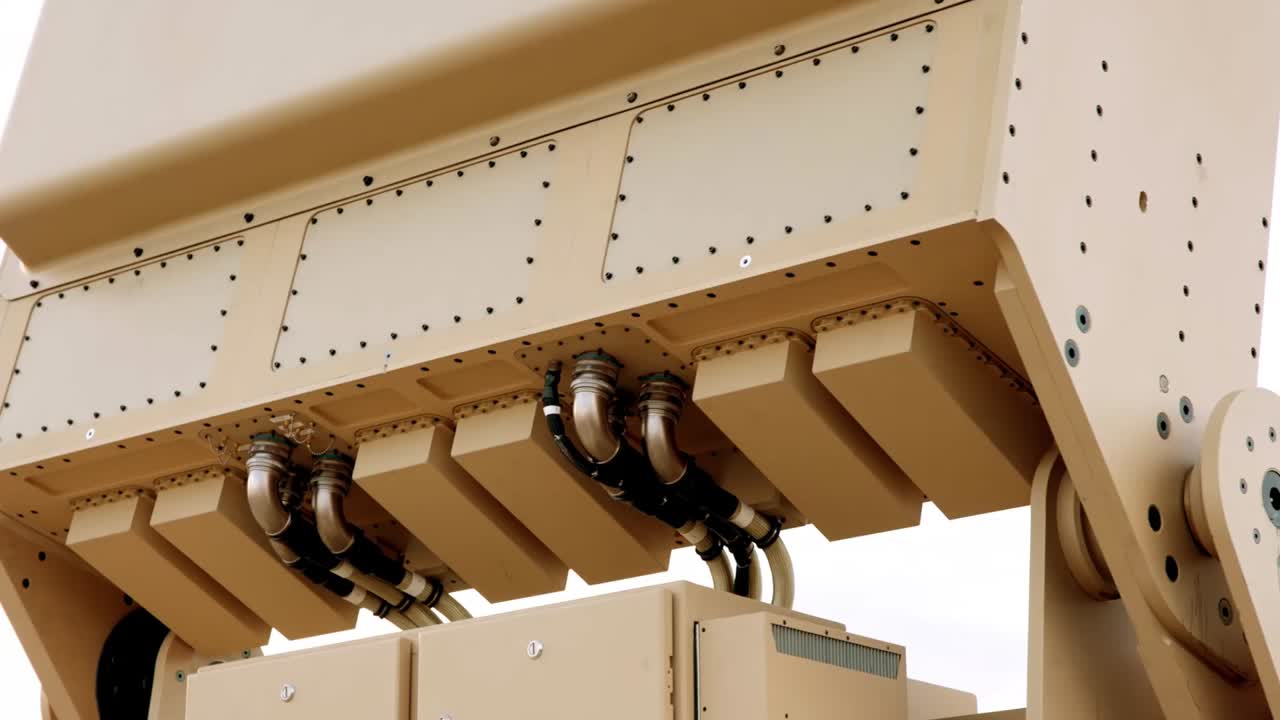
Epirus did for weapons what Intel did for computers in the 1960s: They went Solid-State.
- The Tech (Gallium Nitride): Instead of one giant, fragile tube, Epirus combines thousands of tiny, solid-state chips (GaN amplifiers) to create a massive beam of energy.
- Software-Defined Power: Because it’s solid-state, it’s digital. They can shape the beam via software. They can widen it to take out a whole swarm at once, or narrow it to snipe a single drone without hurting the one next to it.
- Unlimited Magazine: As long as you have electricity (a generator), you have ammo. The cost per shot drops from $2 million (Missile) to pennies (Electricity).
The “Deep Tech” Insurgency
Founded by Grant Verstandig, Bo Marr, and Joe Lonsdale, Epirus represents the new wave of “Silicon Valley Defense.”
While legacy primes (Raytheon, Lockheed) were trying to incrementally improve vacuum tubes, Epirus applied the “agile hardware” approach. They iterated on power management chips (the unsexy component) to achieve power densities that physics textbooks said were impossible for a startup.
They didn’t just build a better weapon; they built a software platform that emits energy.
Founder Lessons from the Frontline
- Fix the Economics, Win the War. The most effective weapon isn’t the biggest boom; it’s the one that restores the economic balance. Epirus wins because it makes drone warfare financially stupid for the enemy.
- Analog to Digital. Every industry eventually moves from vacuum tubes to transistors. Defense was just late to the party. The biggest opportunities in Hard Tech often lie in finding “Vacuum Tube” industries and dragging them into the Solid-State era.
- Safety as a Feature. One of the biggest hurdles for directed energy was “fratricide” (frying your own radios). Epirus used software to create “null zones”—areas where the microwave beam automatically shuts off to protect friendly forces.
Final Word
The era of firing metal at the sky is ending.
When the enemy attacks with software and cheap hardware (swarms), you cannot defend with steel and explosives. You must defend with energy.
Epirus isn’t just a defense contractor. They are the company building the shield that allows civilization to survive the drone age.

Tumisang Bogwasi
Tumisang Bogwasi is an award-winning entrepreneur and strategist sharing insights on business growth, leadership, and innovation.