Why Tesla’s Battery Genius Left to Fix the Grid with Heron

For the last decade, the biggest bottleneck in the technology world has been the battery.
If you wanted to build an electric car, a grid storage system, or a flying taxi, you were constrained by the cost and energy density of lithium-ion cells.
No one did more to solve that bottleneck than Drew Baglino.
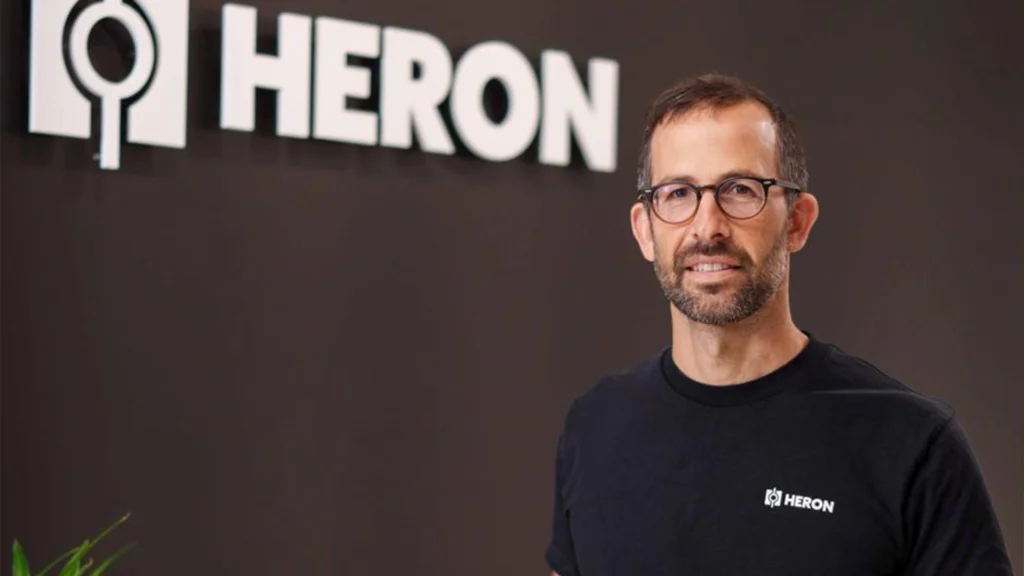
During his 18-year run at Tesla, culminating as the SVP of Powertrain and Energy Engineering, Baglino was the quiet architect behind the company’s battery dominance. He oversaw the development of the 4680 battery cell and the massive stationary storage business (Megapacks).
But in early 2024, Baglino abruptly resigned from Tesla. Why? Because the bottleneck moved.
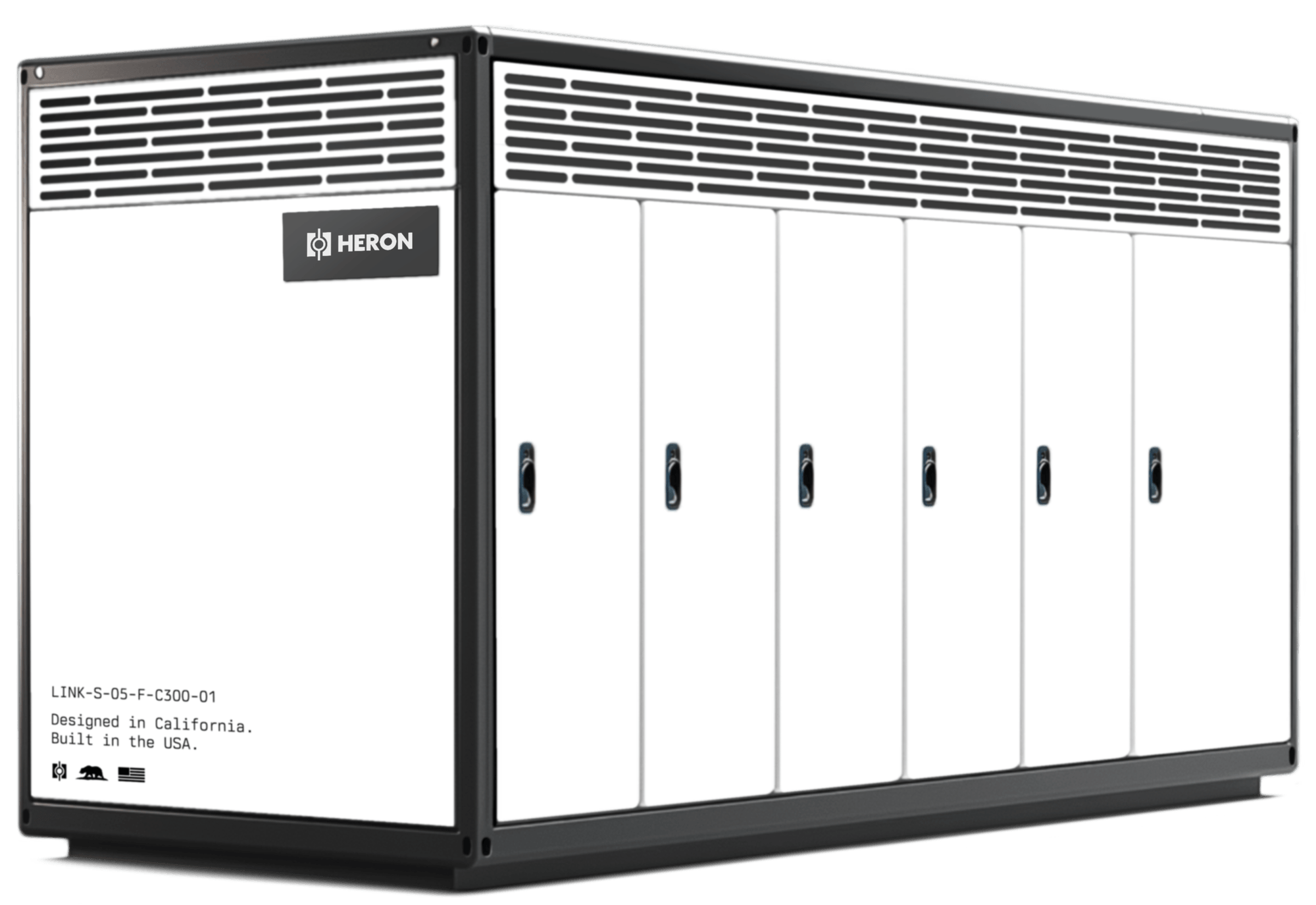
He didn’t retire. He founded Heron, a stealthy new startup aimed at the ultimate infrastructure crisis: The Power Grid.
The Problem: A 19th-Century Machine
We are currently trying to run a 21st-century economy on a 19th-century machine.
The widespread adoption of EVs, the electrification of heating, and the explosive power demands of AI data centers (which require gigawatts of power) are crashing into a legacy power grid.
Right now, the wait time to connect a new clean energy project or data center to the US grid (the “interconnection queue”) can be anywhere from 5 to 7 years. You can build a solar farm in 12 months, but you can’t plug it in until 2030.
The grid lacks capacity, intelligence, and modern transmission technology.
The Playbook: From Edge to Core
At Tesla, Baglino was building hardware for the “edge” of the network, the cars and the localized battery packs. With Heron, he is moving to the “core.”
While exact details of Heron’s technical stack are closely guarded, the mission is clear: modernizing the transmission and distribution of power.
This means using software, advanced power electronics, and grid-enhancing technologies (GETs) to squeeze more capacity out of existing power lines and orchestrate the flow of electricity more efficiently.
It is a shift from storing electrons to routing them.
Founder Lessons: The Theory of Constraints
- Follow the Bottleneck. In business, “The Theory of Constraints” states that any system is only as fast as its slowest component. Baglino realized that batteries are no longer the slowest component; the transmission grid is. Great founders always migrate to the system’s biggest choke point.
- The “Ex-Tesla” Mafia. Just as the PayPal Mafia defined Web2, the “Tesla Mafia” is defining the Hard Tech and Energy transition. Investors know that anyone who survived 18 years of Elon Musk’s manufacturing hell has the operational scar tissue to build anything.
- Unsexy is Lucrative. The grid is boring. It’s heavily regulated, involves ancient utilities, and relies on steel poles and wires. But because it is boring and hard, it is the biggest untapped market in the energy sector today.
Final Word
You can build the most advanced AI chips and the fastest electric cars in the world. But they all share a single point of failure: they need a plug.
Drew Baglino spent nearly two decades proving that the impossible was just an engineering problem. Now, with Heron, he is taking on the biggest engineering problem left on Earth.
The grid is the final boss of the energy transition. And Baglino has entered the arena.

Tumisang Bogwasi
Tumisang Bogwasi is an award-winning entrepreneur and strategist sharing insights on business growth, leadership, and innovation.