StarCloud: The Startup Building Data Centers in Space
We are running out of power.
The AI revolution has a dirty secret: it is voraciously hungry. Data centers are sucking rivers dry for cooling and overwhelming power grids. The demand for compute is exponential, but Earth’s resources are finite.
Most founders are trying to optimize the grid. Philip Johnston decided to leave it behind.
His startup, StarCloud (originally Lumen Orbit), is building data centers in space.
It sounds like science fiction. But they’ve already launched a satellite with an Nvidia H100 GPU (the standard-bearer of the AI boom) into orbit.
This is the story of a startup that looked at the hardest problem in tech and decided the solution wasn’t on Earth.
The Problem: Earth is Too Crowded
Data centers face four hard constraints on Earth:
- Energy: They need massive amounts of constant power, often requiring batteries for solar.
- Cooling: They require millions of gallons of fresh water to keep chips from melting.
- Land: They need vast physical footprints near power sources.
- Permitting: Building a new gigawatt-scale facility on Earth takes years of regulatory battles.
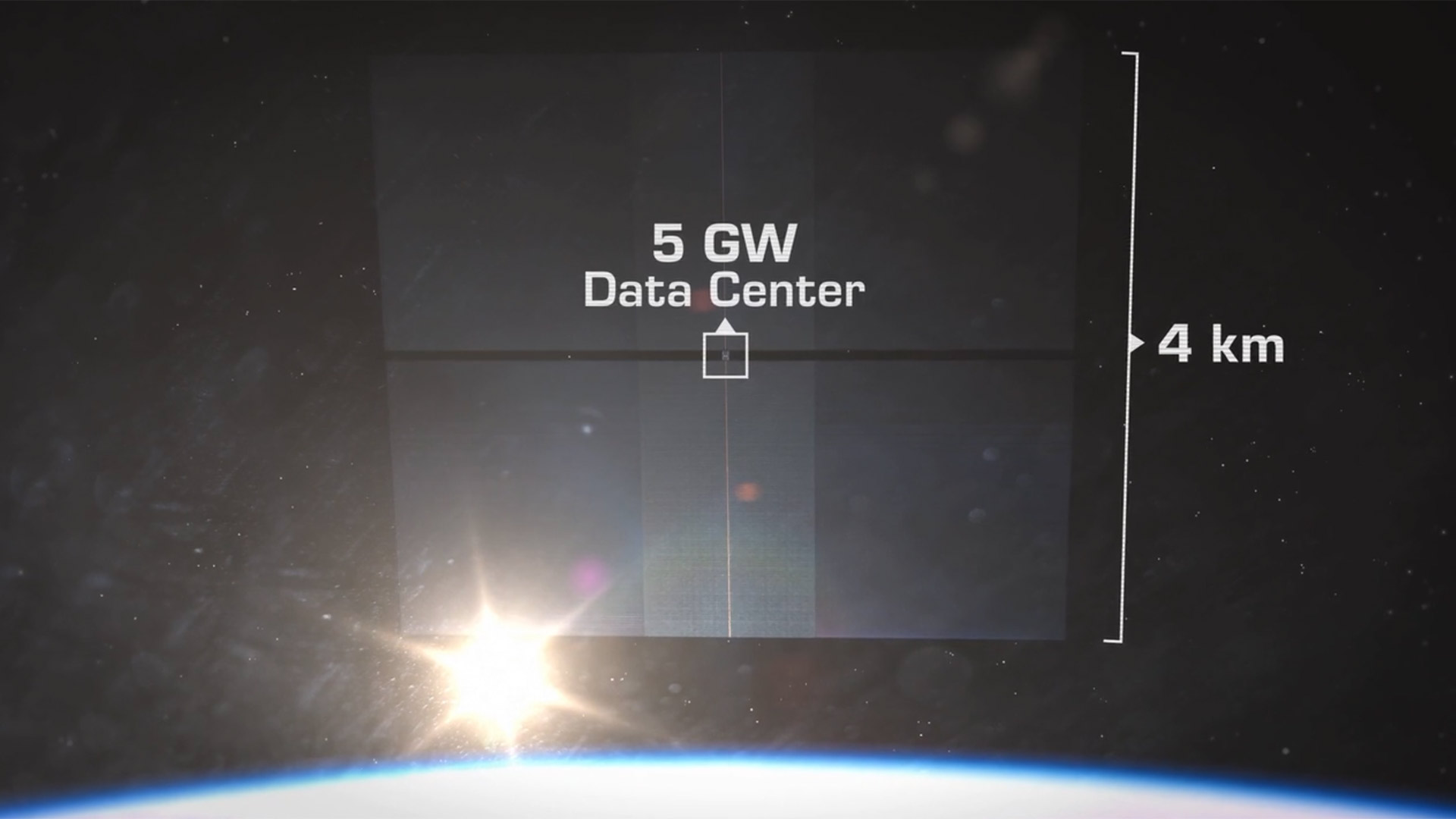
StarCloud flipped the script. By moving to space, they turn these bugs into features:
- Energy: In sun-synchronous orbit, the sun never sets. You have access to 24/7, uninterrupted solar power without batteries.
- Cooling: The vacuum of deep space is the ultimate heat sink. No water required—just radiative cooling.
- Speed: Space allows for rapid deployment to gigawatt-scale, completely bypassing terrestrial zoning and permitting gridlock.
The “Hard Startup” Paradox
When Philip Johnston pitched this idea, it sounded impossible. But he operated on a counterintuitive philosophy inspired by Sam Altman:
“It’s easier to build a hard company than it is to build an easy company.”
If you build a “moderately hard” B2B SaaS app, you are fighting thousands of competitors for talent. If you build a space data center, the best in the world flock to you.

The proof is on their cap table. StarCloud isn’t just a wild idea; it’s backed by the titans of deep tech and defense: Nvidia, Y Combinator, Sequoia, Andreessen Horowitz (a16z), and perhaps most notably, IQT (In-Q-Tel), the strategic investor for the U.S. intelligence community.
By choosing the harder path, StarCloud reduced their market risk. The only risk is technical.
The Execution: A Team Built for the Impossible
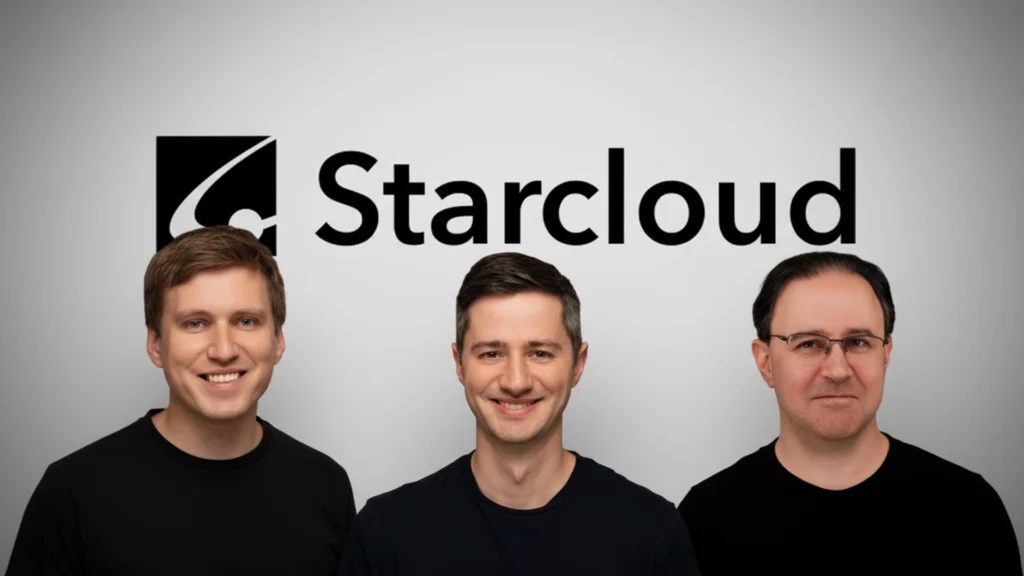
In an industry where timelines are measured in decades, StarCloud moved at the speed of software. They achieved this by assembling a team with the perfect “founder-market fit.”
- The Visionary: CEO Philip Johnston brings a rare mix of high-level strategy (ex-McKinsey) and technical depth (MA in Applied Math & Theoretical Physics), focused specifically on National Security.
- The Architect: CTO Ezra Feilden holds a PhD in Materials Engineering and spent a decade at Airbus Defense & Space, designing large deployable structures for missions like NASA’s Lunar Pathfinder.
- The Engineer: Chief Engineer Adi Oltean spent 20 years at Microsoft working on GPU clusters before moving to SpaceX, where he was the Principal Software Engineer in charge of “tracking beams” for Starlink.
With this triad of leadership, they went from a whiteboard to a live H100 GPU in space in less than two years.

Founder Lessons from the Final Frontier
- Attack the Constraint: Don’t just optimize a broken system (terrestrial energy). Find a new environment where the constraint doesn’t exist.
- Ride the Cost Curve: StarCloud bet on the falling cost of launch. Building a business model on a technology curve that is rapidly declining is a powerful way to spot future opportunities before they are obvious.
- Regulatory Arbitrage is a Moat: By building in orbit, StarCloud avoids the years-long permitting hell of terrestrial construction. Sometimes the fastest way to build is to go where the rules haven’t been written yet.
Final Word
StarCloud is betting that the future of AI isn’t in a warehouse in Northern Virginia. It’s floating 500 kilometers above us.
They are proving that when the resources on the ground are exhausted, the only logical move is to look up.

Tumisang Bogwasi
Tumisang Bogwasi is an award-winning entrepreneur and strategist sharing insights on business growth, leadership, and innovation.