The Eventbrite Killer: How Posh is Turning Ticketing into a Social Network

Eventbrite is a utility. You go there because you have to, buy your ticket, and leave. It’s the yellow pages of the internet age.
Posh is a destination. You go there to discover what your friends are doing, find your tribe, and build a brand.
Founded by two NYU students, Avante Price and Eli Taylor-Lemire, Posh has quietly built a $40 million-backed insurgency against the legacy ticketing giants.
Their secret? They realized that the future of events isn’t about “ticketing.” It’s about curation.
This is the story of how a former child DJ and a photographer built the “TikTok for Events.”
The Origin: From the DJ Booth to the Boardroom
Avante Price isn’t a typical tech CEO. He started DJing at age 5 (yes, really). By high school, he was creating software to employ his friends. By college, he and Eli were running their own high-end event company for NYU students because the existing options were “rundown bars in the Lower East Side.”
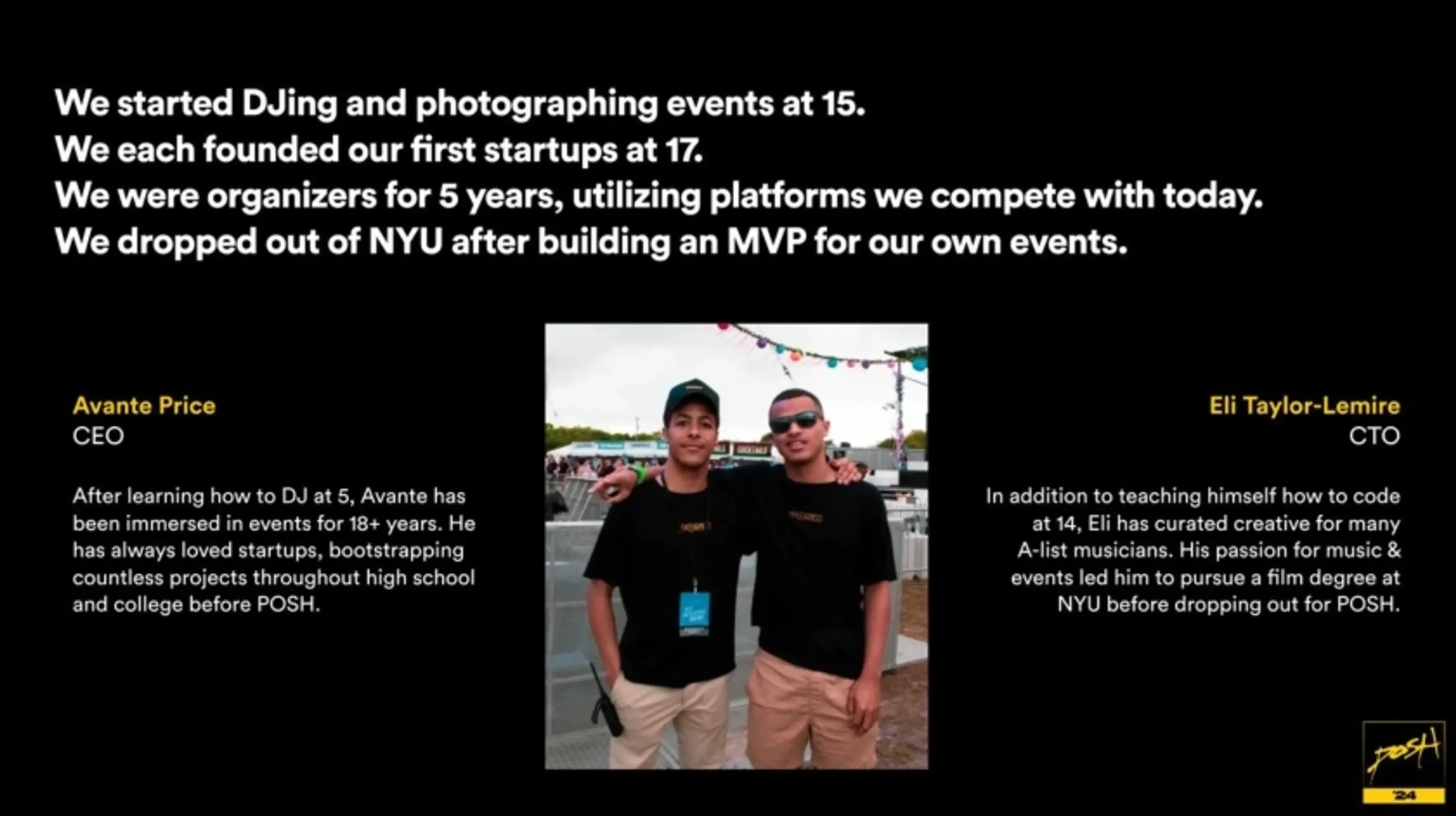
They built Posh originally as an internal tool to manage their own parties. When the pandemic hit, they realized their software was more valuable than their events.
They pivoted from throwing parties to powering them.
The Strategy: From Shopify to TikTok
In the early days, Posh pitched itself as “Shopify for Events,” a white-label toolset for organizers to build their own brand, not Eventbrite’s.
But as they scaled to 6 million users, the analogy evolved. Today, they are building “TikTok for Events.”
- The Problem with Eventbrite: You see a grid of irrelevant options: a pottery class next to a rave next to a yoga session. It’s uncurated noise.
- The Posh Solution: An algorithmic, vertical feed. Just like TikTok feeds you content based on your taste, Posh feeds you events based on your attendance history and your friends’ activity.
It solves the “lonely ticket” problem. You don’t just see the event; you see who else is going.
The Business Model: Financial Alignment
Posh’s smartest move might be its pricing model.
- Eventbrite: Often charges the organizer fees, eating into their margin.
- Posh: Charges the attendee a roughly 10% fee on top of the ticket price. The organizer pays $0.
This creates perfect alignment. Posh only makes money if the organizer sells tickets. It turns Posh from a “vendor” taxing your revenue into a “partner” helping you grow.
The Moat: High-Touch in a Low-Touch World
While competitors rely on automated support tickets, Posh is doing the unscalable work of building community.
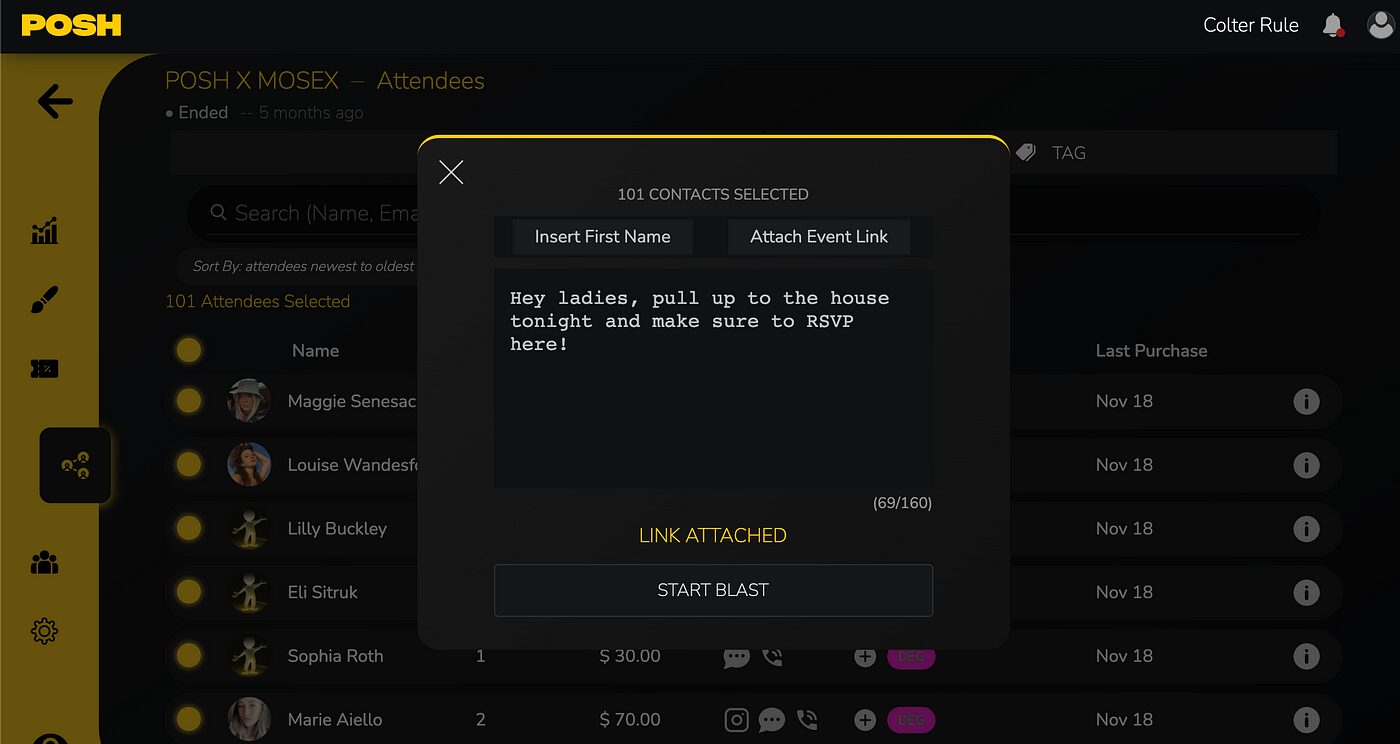
- The “Blue Bubble” Standard: If an organizer texts their support line, they get a reply from a real human (often via iMessage), not a bot.
- The Community Team: Posh flies staff to cities like Columbus or Miami to host happy hours for local organizers, connecting them with venues and sponsors. They are building a physical network, not just a digital one.
- Medici (The AI Co-Pilot): They are rolling out an AI tool that acts as a 24/7 consultant, analyzing an organizer’s data to tell them exactly when to send a text blast or how to price their tickets for maximum revenue.
Founder Lessons from the Gen Z Insurgency
- Unbundle the Mega-Event: The era of the 50,000-person stadium concert is peaking. The future is the “long tail” of 100-500 person curated communities. Posh is building the infrastructure for this democratization.
- People Buy from People: Posh prioritizes the organizer’s brand over the platform’s brand. In the creator economy, people follow curators, not corporations.
- Listen to Your Inner Voice: Avante’s advice to founders is simple: silence the noise. Whether it was resisting his dad’s pressure to be a celebrity DJ kid or ignoring the “standard” way to build a tech company, his success came from following his own intuition.
Final Word
Posh proves that even the most boring, saturated industries (like ticketing) are ripe for disruption if you change the fundamental unit of value.
For Eventbrite, the unit of value is the Ticket. For Posh, the unit of value is the Connection.

Tumisang Bogwasi
Tumisang Bogwasi is an award-winning entrepreneur and strategist sharing insights on business growth, leadership, and innovation.