Mercor’s $10Bn Bet: Why AI Recruitment is the End of the Resume

The resume is dead. It just doesn’t know it yet.
For 50 years, hiring has relied on a piece of paper (or a PDF) where candidates list their history. In the age of AI, where anyone can generate a perfect cover letter and polish a CV in seconds, the “signal-to-noise” ratio of a resume has dropped to zero.
Enter Mercor.
Founded by a trio of 22-year-old dropouts (Brendan Foody, Adarsh Hiremath, and Surya Midha), Mercor has exploded to a 10 billion dollar valuation not by building another job board, but by building an “AI Vetting Engine.”
They realized that the bottleneck wasn’t finding people; it was verifying them.

Highlights: The “Truth Engine” Thesis
- The Problem: AI killed the resume. When ChatGPT can write a perfect application, recruiters are drowning in high-quality noise.
- The Solution: Mercor uses AI to conduct 20-minute, deep-dive video interviews with candidates at scale. It doesn’t read about your skills; it interrogates them.
- The Moat: They have indexed over 300,000 engineers and researchers. This is a proprietary dataset of verified human capability, not just claimed history.
- The “Moneyball” Effect: By using AI to assess skill objectively, Mercor finds “undervalued assets”—brilliant engineers in Nigeria, India, or rural America who don’t have a Stanford degree but have Stanford-level code.
The Playbook: How Mercor Automated the Interview
Mercor’s strategy is a masterclass in Vertical AI. They didn’t try to fix “HR.” They fixed the specific, high-friction problem of technical vetting.
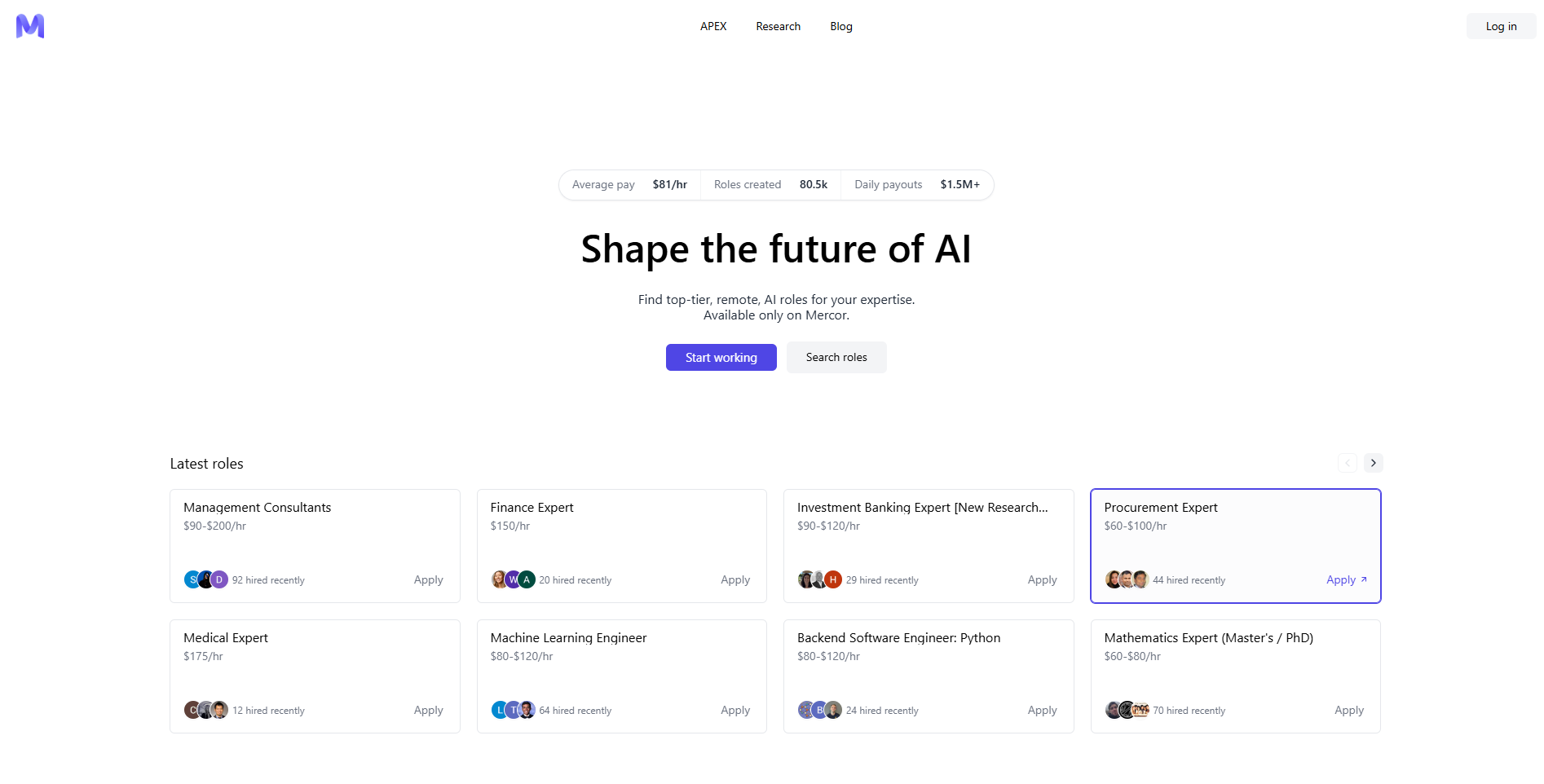
1. The AI Interviewer
Instead of a recruiter scanning keywords, an AI agent interviews the candidate. It asks dynamic, follow-up questions. If a candidate claims to know Python, the AI asks them to explain a specific edge case in their recent GitHub commit.
- Result: High-fidelity signal. You can’t fake a live technical interrogation.
2. The “Unified Profile”
Mercor condenses thousands of data points (GitHub repos, open-source contributions, and the AI interview transcript) into a single, searchable profile.
- Result: A hiring manager can search for “Engineer who knows React and has built a payment gateway,” and get a pre-vetted list of people who have proven they can do exactly that.
3. The Supply Chain for Intelligence
Just as Nvidia powers the compute layer of AI, Mercor is powering the human layer. Frontier labs like OpenAI and Anthropic use Mercor to find the specialized researchers and data trainers they need to build the next model.
- Result: Mercor has become the “Human Capital Supply Chain” for the AI revolution.
The New Economics: Killing the “Headhunter” Tax
Traditional recruiting agencies charge 20-30% of a first year’s salary. It’s a massive tax on the economy.
Mercor’s model collapses this cost structure.
- Zero Marginal Cost of Vetting: Once the AI interview is built, vetting 1,000 candidates costs the same as vetting one.
- Global Arbitrage: They unlock a global talent pool, allowing US companies to hire top-tier talent in emerging markets (like Africa and India) instantly, with trust.
The Risks
- AI Bias: Can an AI interviewer truly judge “soft skills” or culture fit? Or will it optimize for people who speak like LLMs?
- The “Gaming” Problem: As soon as candidates know they are being interviewed by an AI, they will train on how to “beat” the bot. It becomes an arms race.
- Commoditization: If LinkedIn or Indeed launches their own AI interviewer, does Mercor’s moat evaporate?
The BWR Take
Mercor isn’t just a recruiting tool. It is a Truth Engine.
In a world where digital content is increasingly synthetic, the value of verified human truth is skyrocketing. Mercor provides that verification layer for labor.
For founders and boards, the lesson is clear: Stop trusting the resume. The future of hiring is audition-based, and the only way to scale the audition is with AI.

Tumisang Bogwasi
Tumisang Bogwasi is an award-winning entrepreneur and strategist sharing insights on business growth, leadership, and innovation.