How Shopify’s War on Meetings Saved 76,000 Hours

There is a silent killer inside your company.
It doesn’t show up on your P&L statement as a line item. Your CFO isn’t tracking it. But it destroys more enterprise value, burns more capital, and ruins more team morale than bad marketing or buggy software combined.
It is The Meeting Tax.
As startups scale from 10 to 50 to 200 employees, a fatal operational shift occurs. The team stops doing work and starts talking about work. Calendars fill up with recurring syncs, daily stand-ups, and “alignment” calls. Output slows to a crawl, yet everyone is “exhausted.”
For a CEO, fixing this isn’t an HR initiative. It is a fundamental operational strategy. And no one executed this strategy more ruthlessly than Shopify.
The Pain Point: The Payroll Burn
Most managers treat meetings as if they are free. They are not.
If a mid-level manager wants to spend $1,000 on a new software tool, they have to jump through hoops and get CFO approval. Yet, that same manager can call a 1-hour recurring meeting with eight senior engineers, burning $1,000 in payroll every single week, and no one bats an eye.
This happens because Founders operate on a “Manager Schedule.” Their day is supposed to be sliced into 30-minute blocks of decision-making.
But designers, engineers, and writers operate on a “Maker Schedule.” They need three to four hours of uninterrupted focus to build anything of value. When a CEO drops a 30-minute “quick sync” into the middle of a Maker’s afternoon, it doesn’t just cost 30 minutes. It destroys their entire afternoon of “Flow State.”
The Radical Story: The Shopify Purge
Shopify’s CEO, Tobi Lütke, realized that his company was drowning in its own calendar. Output was dropping, and employees were suffering from severe context-switching fatigue.

Instead of sending a polite memo asking people to “have fewer meetings,” Lütke launched a nuclear operational strike.
1. The Calendar Purge: Overnight, Shopify’s IT department ran a script that automatically deleted every single recurring meeting with more than two people from the entire company calendar. Employees woke up to empty schedules. It instantly freed up over 76,500 hours of employee time. If a meeting was truly necessary, the organizer had to actively recreate it and justify its existence. Most of them never returned.
2. The Meeting Cost Calculator: To ensure the Meeting Tax didn’t slowly creep back, Shopify changed the technology itself. They built a “Meeting Cost Calculator” directly into their internal calendar app.
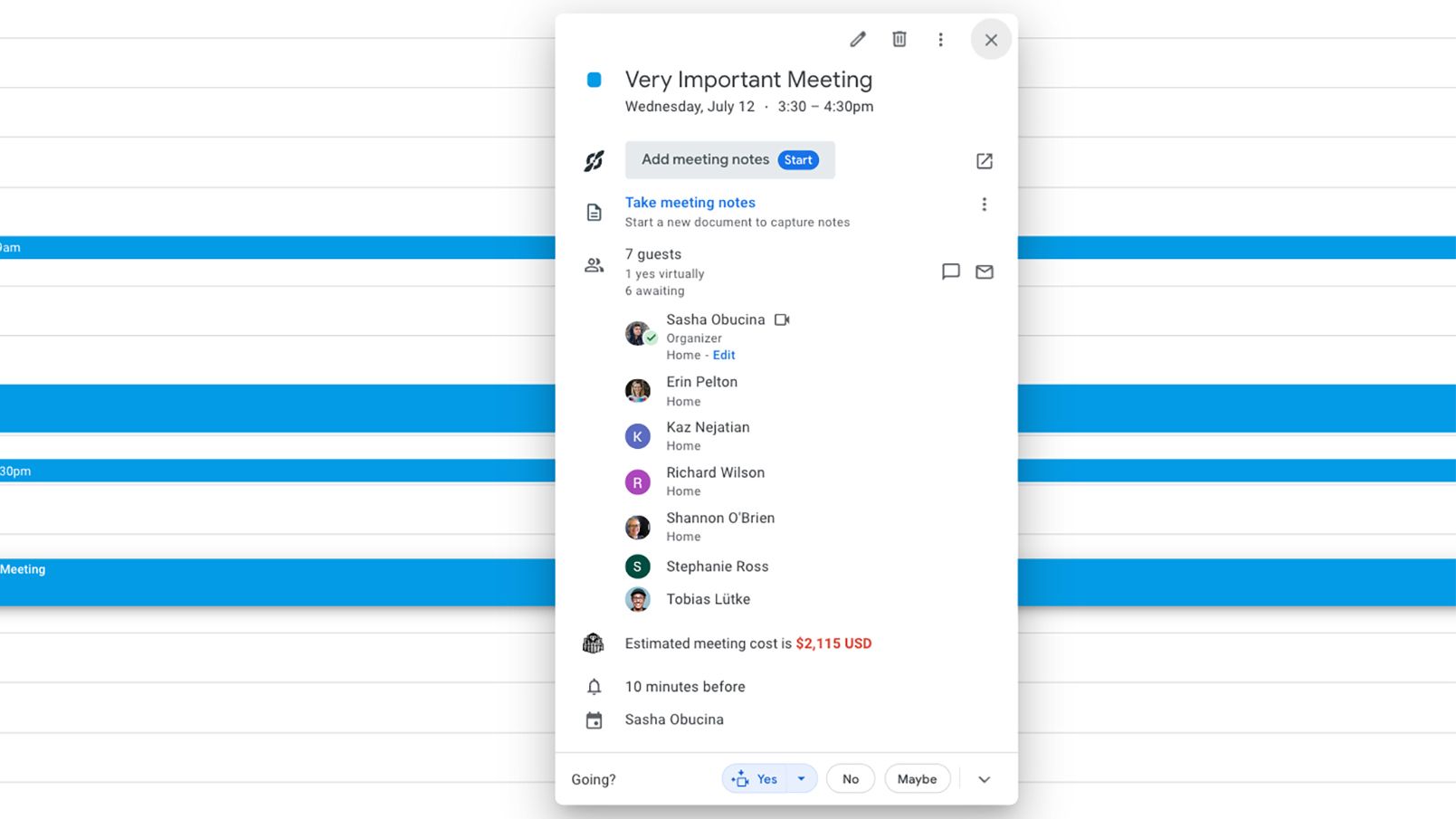
Now, when a Shopify manager invites six people to a meeting, the calendar calculates their average salaries and literally shows the organizer a pop-up: “This meeting will cost the company $1,400. Are you sure you want to schedule it?”
It immediately changed the psychology of the team. It forced them to treat time like hard capital.
The Founder’s Playbook: How to Kill the Meeting Tax
If your team is moving slow, the answer is rarely “hire more people.” The answer is usually “delete the recurring meetings.”
Here is the 3-step Shopify Playbook to implement on Monday morning:
- The Nuclear Reset: Once a quarter, delete every recurring internal meeting from the calendar. Force organizers to re-justify why the meeting needs to exist before putting it back on. You will find that 30% to 50% of them are just operational bloat.
- Price Tag the Calendar: You might not be able to build a custom calendar extension, but you can change the culture. Force managers to calculate the hourly payroll burn of their attendee list before they hit “send” on the invite.
- No-Meeting Wednesdays: Institute a mandatory company-wide day with zero internal meetings. Give your “Makers” a guaranteed 8-hour block of uninterrupted flow state every single week.
Meetings should be reserved exclusively for three things: Complex debate, sensitive feedback, and team bonding. Innovation doesn’t happen in a status update call. It happens in the uninterrupted quiet of deep work.
Protect your team’s time, and watch your product velocity explode.

Tumisang Bogwasi
Tumisang Bogwasi is an award-winning entrepreneur and strategist sharing insights on business growth, leadership, and innovation.